
Best Flooring for Moisture-Prone Areas: Bathrooms, Kitchens & Basements
- Updated: May 14th, 2026
- Author: Floors by Roberts team
If you're renovating a bathroom, finishing a basement, or updating a kitchen floor, moisture resistance should be at the top of your checklist. Some flooring materials handle dampness and humidity beautifully, others can warp, swell, or grow mold if installed in the wrong spot.
Here's what the team at Floors by Roberts recommends for the wettest areas of your home.
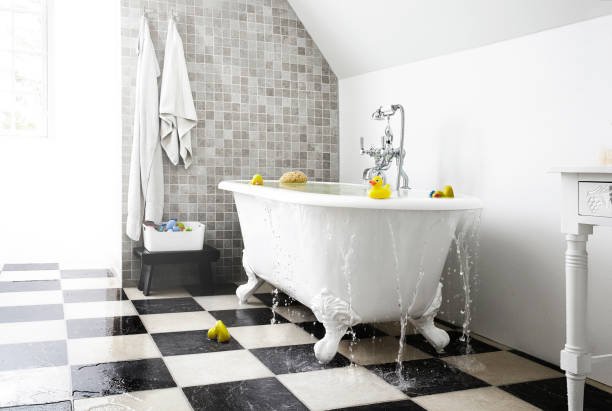
Tile — The Best Flooring for Damp Areas
When it comes to moisture resistance, tile is the gold standard. Properly sealed and grouted, tile floors are nearly 100% waterproof — no water can seep between tiles to reach the subfloor. Beyond its performance in wet areas, tile is exceptionally durable, easy to clean, and holds up well in high-traffic spaces without showing wear. It's an ideal choice for bathrooms, kitchens, entryways, and laundry rooms.
Sheet Vinyl — An Excellent Waterproof Option
Sheet vinyl, manufactured in large rolls with few to no seams, is another outstanding choice for wet areas. Available as a floating or glue-down installation, sheet vinyl creates a continuous, waterproof surface that resists spills and moisture as long as seams are properly sealed. It's easier on the budget than tile, simple to maintain, and available in a wide range of styles that convincingly mimic wood or stone.
Luxury Vinyl Plank & Vinyl Tile — Great for High Moisture Rooms
Both luxury vinyl plank (LVP) and vinyl tile are made entirely from synthetic materials, meaning they won't absorb water or rot. LVP in particular has become one of the most popular choices for kitchens, bathrooms, and basements across the Fox Valley. It's comfortable underfoot, stylish, and remarkably resilient. The one area to watch is the seams: improper installation can leave small gaps where water may reach the subfloor, so professional installation is strongly recommended.
Sealed Concrete — A Modern Option for Basements
Concrete floors have grown in popularity as a residential flooring option, particularly for basements. When properly sealed, concrete resists moisture absorption and is easy to clean. It can also be stained, colored, or textured to suit a variety of design styles — making it far more versatile than most people expect.